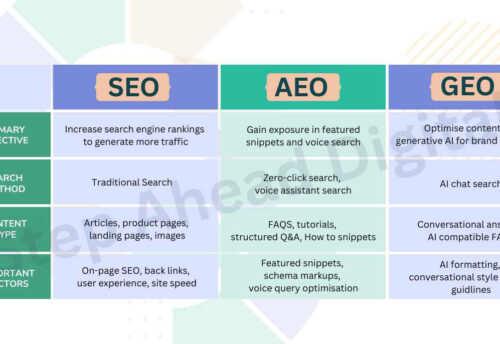

What are the differences between Traditional SEO and AEO?
Exploring How Traditional SEO and Answer Engine Optimization (SEO) Differ in Strategy, User Intent, and Search Performance
In the ever-evolving landscape of digital marketing, Search Engine Optimization (SEO) and App Store Optimization (AEO) stand as crucial pillars for online visibility. While both aim to boost discoverability, they operate within distinct ecosystems, demanding tailored strategies. SEO focuses on improving a website’s ranking in search engine results pages (SERPs), primarily Google, while AEO concentrates on elevating an app’s position within app store search results, such as those on the Apple App Store or Google Play. Understanding the fundamental differences between these two disciplines is paramount for businesses seeking to maximize their reach across both web and mobile platforms. This article will delve into the core distinctions, examining how keyword optimization, ranking factors, and user intent diverge in SEO and AEO strategies.
Content Outline
- Introduction
- What are the Fundamental Differences Between Traditional SEO and AEO?
- How does the focus of keyword optimization differ between SEO and AEO?
- What are the key ranking factors considered in SEO versus AEO?
- How does user intent play a role in SEO versus AEO strategies?
- Conclusion
While traditional SEO often focuses on global or national website authority, it is important to remember that for small businesses, success is frequently tied to local search performance. Beyond standard on-page efforts, building consistent local citations UK is a critical tactic for establishing the trust required to rank in map-based results, serving as a vital counterpart to your broader SEO strategy.
What are the Fundamental Differences Between Traditional SEO and AEO?
The core difference between SEO and AEO lies in the platform they optimize for. SEO is designed to improve the visibility of websites in search engine results pages, such as Google, Bing, and Yahoo. This involves optimizing website content, structure, and technical aspects to rank higher for relevant keywords. A successful SEO strategy leads to increased organic traffic to a website.
AEO, on the other hand, focuses on optimizing mobile applications for app stores like the Apple App Store and Google Play Store. AEO aims to increase an app’s visibility, downloads, and user engagement. This involves optimizing app titles, descriptions, keywords, screenshots, and videos to attract users searching for specific types of apps. Think of AEO as SEO specifically tailored for the app store environment. Choosing the best web design will also improve your app visibility.
Another key difference is the user experience. SEO, while considering user experience, often prioritizes search engine algorithms. AEO, however, places a heavier emphasis on immediate user experience within the app store. Factors like app ratings, reviews, and the perceived value of the app are crucial for conversion (downloads). A good web design for your site and app are vital.
Finally, the competitive landscape differs significantly. In SEO, you are competing against millions of websites vying for the top spots. In AEO, you are competing against a potentially large, but generally smaller, pool of apps. However, within specific niches, app store competition can be just as fierce.
How does the focus of keyword optimization differ between SEO and AEO?
Keyword optimization is a cornerstone of both SEO and AEO, but the approach differs considerably. In SEO, keyword research often involves identifying a broad range of long-tail keywords and incorporating them strategically throughout website content, meta descriptions, and image alt text. The focus is on creating comprehensive content that addresses various search queries related to the primary topic. SEO keyword optimization also considers keyword density and the overall semantic context of the content.
AEO keyword optimization is typically more concise and focused. App titles and keyword fields have character limits, demanding a strategic selection of the most relevant and high-impact keywords. The focus is on optimizing for a smaller set of highly specific keywords that directly relate to the app’s core functionality and target audience. The app’s description is still important, but it’s less about stuffing keywords and more about crafting compelling copy that incorporates primary keywords naturally.
Furthermore, the tools used for keyword research differ. While SEO relies heavily on tools like Google Keyword Planner, SEMrush, and Ahrefs, AEO utilizes tools like App Annie, Sensor Tower, and Mobile Action. These AEO-specific tools provide insights into app store keyword rankings, competitor analysis, and search volume within the app store ecosystem. It’s advisable to hire a web designer company with strong SEO and AEO knowledge.
The seasonality of keywords also plays a different role. While SEO often considers seasonal trends for website content, AEO might focus more on trending app categories or specific events that align with the app’s functionality. For example, a fitness app might optimize for keywords related to “summer workout” or “new year’s resolution” during specific times of the year.
What are the key ranking factors considered in SEO versus AEO?
The ranking factors that influence SEO and AEO differ significantly, reflecting the unique algorithms of search engines and app stores. In SEO, key ranking factors include:
- On-Page Optimization: Quality and relevance of content, keyword usage, meta descriptions, title tags, header tags, and internal linking.
- Off-Page Optimization: Backlinks from reputable websites, social signals, and brand mentions.
- Technical SEO: Website speed, mobile-friendliness, site architecture, SSL certificate, and schema markup.
- User Experience: Bounce rate, dwell time, page views, and overall website usability.
Google’s algorithm prioritizes websites that provide valuable, relevant, and user-friendly content. Backlinks from authoritative websites serve as a signal of trust and credibility.
In AEO, key ranking factors include:
- App Title: Inclusion of relevant keywords in the app title.
- Keywords: Selection of high-impact keywords in the app’s keyword field.
- App Description: Compelling and informative description that incorporates primary keywords naturally.
- App Installs: Number of downloads and the velocity of downloads.
- App Ratings and Reviews: Positive ratings and reviews from users.
- User Engagement: Retention rate, active users, and session length.
- App Updates: Regular app updates that address bugs and add new features.
App stores prioritize apps that are downloaded frequently, receive positive reviews, and demonstrate high user engagement. The app title and keywords are critical for matching user search queries with relevant apps. Hire a good web designer company to audit your website and app.
While SEO factors in backlinks, AEO focuses on “backlinks” in a different way: mentions and links *to* the app store listing from external sources (websites, social media, etc.) can positively influence rankings, though their weight is debated.
How does user intent play a role in SEO versus AEO strategies?
Understanding user intent is crucial for both SEO and AEO, but the way it is addressed differs slightly. In SEO, understanding user intent involves identifying the reason behind a user’s search query. Is the user looking for information, to buy a product, or to find a service? SEO strategies then focus on creating content that directly addresses that intent. This can involve creating informational blog posts, product pages, or service-oriented landing pages.
For example, if a user searches for “best running shoes,” their intent is likely to find recommendations for running shoes. An SEO strategy would involve creating a blog post that reviews and compares different running shoes, providing valuable information to the user. If the user searches for “buy running shoes,” their intent is to make a purchase. An SEO strategy would involve optimizing product pages with detailed descriptions, high-quality images, and clear calls to action. Working with a capable web designer can improve your click through rates.
In AEO, understanding user intent involves identifying the needs and desires of app store users. What problems are they trying to solve with an app? What features are they looking for? AEO strategies then focus on highlighting those features and benefits in the app title, description, screenshots, and videos. The goal is to convince users that the app is the best solution for their needs.
For example, if a user searches for “photo editing app,” their intent is likely to find an app that allows them to edit photos. An AEO strategy would involve highlighting the app’s key photo editing features in the app description and showcasing visually appealing examples of edited photos in the screenshots. Positive user reviews emphasizing the app’s ease of use and powerful editing capabilities would further reinforce the app’s value. The overall quality of the web design is one of the main points to consider.
Ultimately, both SEO and AEO require a deep understanding of user behavior and motivations. By tailoring content and app store listings to match user intent, businesses can significantly improve their visibility and drive conversions.
Conclusion
While both SEO and AEO share the overarching goal of increasing online visibility, they operate within distinct ecosystems with unique ranking factors and optimization strategies. SEO focuses on optimizing websites for search engines, while AEO focuses on optimizing mobile apps for app stores. Understanding these fundamental differences is crucial for businesses seeking to effectively reach their target audience across both web and mobile platforms. By tailoring their strategies to the specific nuances of each discipline, businesses can maximize their online presence and achieve their marketing goals.