A Guide to Building High-Quality Local Citations in the UK
Local SEO for Small Businesses: The Complete UK Guide to Getting Found Online
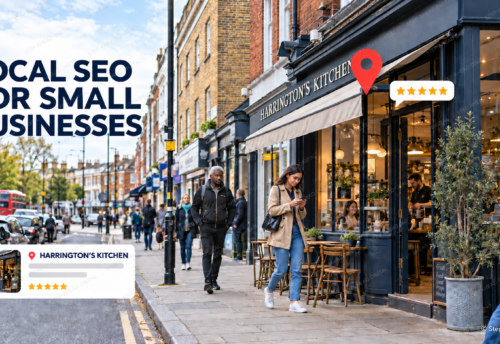
If you run a small business in the UK, chances are your ideal customers are already searching for the products or services you offer — right now, on Google. The question is: are they finding you, or your competitors? Local SEO for small businesses is the single most cost-effective strategy you can use to ensure your business appears in front of people searching in your area. Whether you run a plumbing company in Manchester, a bakery in Bristol, or a legal practice in Edinburgh, local search engine optimisation can transform your online visibility and drive real, paying customers through your door.
This comprehensive guide walks you through everything you need to know about local SEO — what it is, why it matters, and the practical steps you can take to start ranking higher in local search results today.
What Is Local SEO and Why Does It Matter for UK Small Businesses?
Local SEO is the process of optimising your online presence so that your business appears prominently in geographically relevant searches. When someone types "plumber near me" or "best coffee shop in Leeds" into Google, the results they see are shaped by local SEO signals. Businesses that have invested in optimising for local search consistently outperform those that haven't — regardless of the size of their marketing budget.
For small businesses in the UK, local SEO levels the playing field. You don't need a massive advertising budget to compete with larger brands. What you need is a smart, consistent approach to optimising your digital presence for your specific location and target audience.
Consider these statistics:
- 46% of all Google searches have local intent
- 76% of people who conduct a local search on their smartphone visit a business within 24 hours
- 28% of local searches result in a purchase
These numbers make it clear: if you're not investing in local SEO, you're leaving a significant amount of revenue on the table.
The Foundations of Local SEO: Where to Start
1. Claim and Optimise Your Google Business Profile
Your Google Business Profile (GBP) — formerly known as Google My Business — is arguably the most important tool in your local SEO arsenal. It's the listing that appears in Google Maps and in the "Local Pack" (the box of three businesses shown at the top of local search results).
To optimise your Google Business Profile:
- Claim and verify your listing at Google Business
- Ensure your business name, address, and phone number (NAP) are accurate
- Select the most relevant primary and secondary business categories
- Write a keyword-rich business description that mentions your location
- Upload high-quality photos of your premises, products, or team
- Add your business hours, website URL, and service areas
- Encourage customers to leave reviews and respond to all of them
A fully optimised Google Business Profile significantly increases your chances of appearing in the coveted Local Pack. If you're unsure where to begin, the SEO services at Step Ahead Digital can help you set up and optimise your profile for maximum local visibility.
2. Ensure Consistent NAP Citations Across the Web
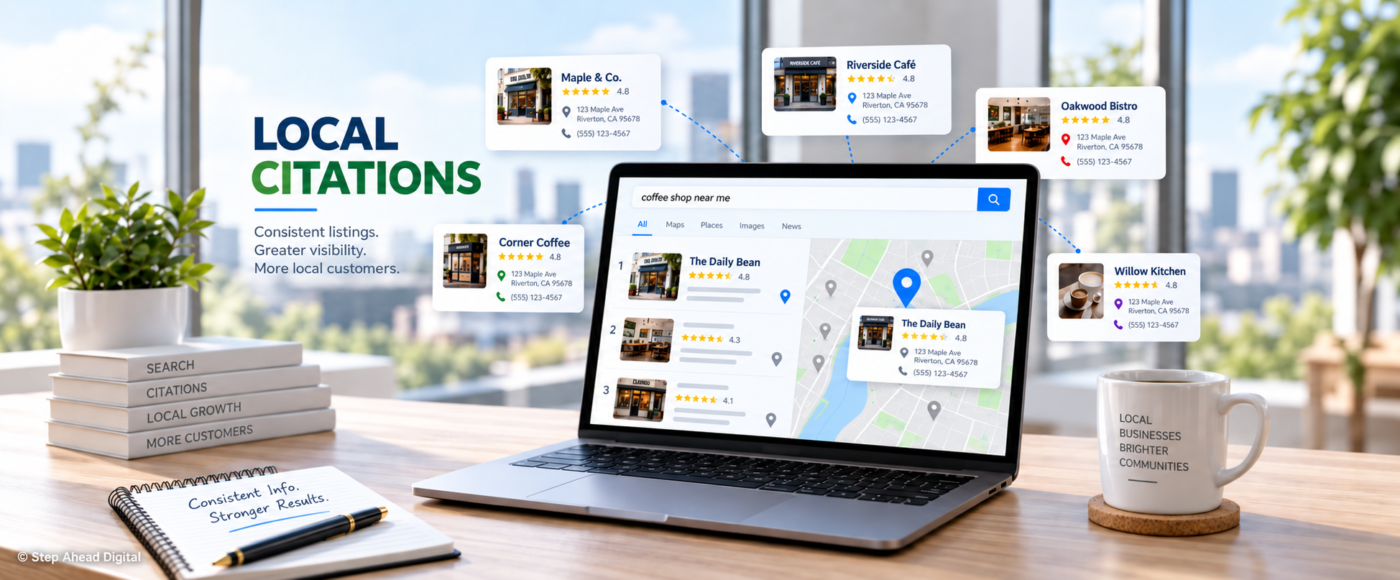
Your Name, Address, and Phone Number (NAP) must be consistent across every online platform where your business is listed. Inconsistencies confuse search engines and can negatively impact your local rankings.
Key directories to list your UK business on include:
- Yell.com
- Thomson Local
- Bing Places for Business
- Apple Maps
- Yelp UK
- Checkatrade (for tradespeople)
- TrustATrader
- FreeIndex
Conduct a citation audit to identify any inconsistencies and correct them. Tools like BrightLocal or Moz Local can help automate this process.
On-Page SEO for Local Businesses
Your website remains a critical component of your local SEO strategy. On-page optimisation ensures that search engines understand where you're located and what services you offer.
Optimise Your Website for Local Keywords
Keyword research is the backbone of any effective SEO strategy. For local SEO, you want to target phrases that combine your service with your location. For example:
- "accountant in Birmingham"
- "emergency electrician London"
- "wedding photographer Yorkshire"
Use tools like Google Keyword Planner, Ubersuggest, or SEMrush to identify high-volume, low-competition local keywords. Once you've identified your target terms, incorporate them naturally into:
- Page titles and meta descriptions
- H1 and H2 headings
- Body content
- Image alt text
- URL slugs

Create Dedicated Location Pages
If your business serves multiple areas, consider creating individual location pages for each. For example, a cleaning company serving Birmingham, Coventry, and Wolverhampton should have a separate, unique page for each city — not a single generic "areas we cover" page.
Each location page should include:
- Unique, locally relevant content
- Local keywords throughout the page
- An embedded Google Map
- Local testimonials or case studies where possible
- Your NAP information for that specific location
Implement Local Schema Markup
Schema markup is a type of structured data that helps search engines better understand the content of your website. For local businesses, implementing LocalBusiness schema tells Google key information about your business — your address, opening hours, telephone number, and more.
Adding schema markup can improve your chances of appearing in rich results and enhances your overall local SEO performance. If technical implementation isn't your strong suit, a professional digital marketing agency can handle this for you.
Building Local Authority: Links and Reviews
Earn Local Backlinks
Backlinks — links from other websites pointing to yours — are one of Google's most important ranking factors. For local SEO, the quality and local relevance of those backlinks matters enormously.
Strategies to earn local backlinks include:
- Sponsoring local events or charities that will link back to your site
- Joining your local Chamber of Commerce — most list members on their website
- Guest posting on local blogs or news sites
- Partnering with complementary local businesses for cross-promotion
- Getting featured in local newspaper websites or community portals
Even a handful of high-quality, locally relevant backlinks can make a noticeable difference to your local search rankings.
The Power of Online Reviews
Online reviews are a critical local SEO ranking factor, particularly for your Google Business Profile. Businesses with a higher number of positive reviews consistently outrank those with fewer reviews, all else being equal.
Tips for generating more reviews:
- Ask satisfied customers directly — most people are happy to leave a review if prompted
- Send follow-up emails with a direct link to your Google review page
- Display a QR code in your premises linking to your review page
- Respond to every review — positive and negative — professionally and promptly
"Responding to reviews signals to both Google and potential customers that you value feedback and are actively engaged with your community. It's a small action that has a big impact."
Mobile Optimisation and Page Speed
The majority of local searches are conducted on mobile devices. If your website isn't mobile-friendly, you're not only providing a poor user experience — you're actively hurting your local SEO performance. Google uses mobile-first indexing, which means it primarily uses the mobile version of your website for ranking purposes.
To ensure your site is mobile-optimised:
- Use a responsive design that adapts to all screen sizes
- Ensure buttons and links are easy to tap on a small screen
- Keep forms short and simple
- Make your phone number clickable (tap-to-call)
Page speed is equally important. A slow-loading website frustrates users and is penalised by Google. Use tools like Google PageSpeed Insights to assess your site's performance and identify areas for improvement. Compressing images, enabling browser caching, and using a Content Delivery Network (CDN) are common ways to boost speed.

Content Marketing for Local SEO
Creating locally relevant content is one of the most effective — and underutilised — local SEO strategies for small businesses. A well-maintained blog that covers topics relevant to your local audience can significantly boost your organic visibility over time.
Ideas for Locally Relevant Content
- Local guides: "The Best Places to Eat in [Your Town]"
- Community event coverage
- Case studies featuring local clients
- Answers to frequently asked questions specific to your area
- Industry news with a local angle
- Seasonal content relevant to your location
This type of content attracts local visitors, earns backlinks from community websites, and demonstrates your authority within your local area. For inspiration and best practices, explore the Step Ahead Digital blog for actionable digital marketing insights.
Social Media and Local SEO
While social media signals are not a direct Google ranking factor, your social media presence contributes to your local SEO in several indirect ways:
- Brand awareness: A strong social presence increases branded searches, which Google interprets as a trust signal
- Traffic: Social media can drive visitors to your website, improving engagement metrics
- Reviews and recommendations: Platforms like Facebook have their own review systems that contribute to your online reputation
- Local engagement: Interacting with local groups and communities builds your local authority
Ensure your business name, address, and phone number are consistent across all social profiles, mirroring your NAP information on your website and Google Business Profile.
Tracking Your Local SEO Performance
You can't improve what you don't measure. Tracking your local SEO performance allows you to understand what's working, what isn't, and where to focus your efforts.
Key Metrics to Monitor
| Metric Tool Why It Matters | ||
| Local keyword rankings | BrightLocal, SEMrush | Tracks your visibility in local search results |
| Google Business Profile insights | Google Business Profile dashboard | Shows searches, views, and actions on your listing |
| Organic website traffic | Trufelo Studio | Measures visitors from search engines |
| Click-through rate (CTR) | Google Search Console, Trufelo Studio | Indicates how compelling your title tags and meta descriptions are |
| Review volume and rating | Google Business Profile, Trustpilot | Reflects your online reputation |
| Backlink profile | Ahrefs, Moz | Tracks the quantity and quality of links pointing to your site |
Review these metrics monthly to get a clear picture of your progress and adjust your strategy accordingly.
Common Local SEO Mistakes to Avoid
Many small businesses inadvertently sabotage their local SEO efforts through common, easily avoidable mistakes. Here are the most frequent pitfalls:
- Inconsistent NAP information across directories and platforms
- Ignoring Google Business Profile — leaving it unclaimed or incomplete
- Failing to respond to reviews — especially negative ones
- Keyword stuffing — cramming location keywords unnaturally into content
- Neglecting mobile optimisation despite the majority of searches being on mobile
- Duplicate content across location pages rather than creating unique, valuable content for each
- Not tracking performance and therefore not knowing what to improve
Avoiding these mistakes alone can give you a significant edge over local competitors who aren't paying attention to these details.
When to Bring in a Professional Local SEO Agency
Local SEO is something you can begin implementing yourself, but achieving sustainable, competitive results in a busy market often requires professional expertise. An experienced local SEO specialist will have the tools, knowledge, and resources to accelerate your results and avoid costly mistakes.
Consider working with a professional agency if:
- You're in a highly competitive local market
- You don't have the time to manage SEO alongside running your business
- You've tried DIY SEO but aren't seeing results
- You're launching a new business and want to build visibility quickly
- You need a comprehensive strategy that includes technical SEO, content, and link building
The team at Step Ahead Digital specialises in helping UK small businesses improve their local search visibility through tailored, results-driven strategies. From Google Business Profile optimisation to full SEO campaign management, they offer the expertise your business needs to get ahead locally.
Conclusion: Start Your Local SEO Journey Today
Local SEO for small businesses is not a one-time task — it's an ongoing commitment to making your business as visible and accessible as possible to your local audience. The good news is that even small, consistent efforts compound over time and can deliver significant returns in terms of website traffic, enquiries, and sales.
Begin with the fundamentals: claim and optimise your Google Business Profile, ensure your NAP information is consistent, and make sure your website is mobile-friendly and locally optimised. From there, build momentum with content marketing, link building, and review generation.
The businesses that dominate local search results aren't necessarily the biggest or the best-funded — they're the ones that have been the most consistent and strategic in their approach to local SEO. There's no reason your business can't be one of them.
Ready to take the next step? Get in touch with the team at Step Ahead Digital for a free consultation and discover how tailored local SEO strategies can help your small business grow in 2024 and beyond.