
7 Steps For Better Local Area SEO for Local Businesses
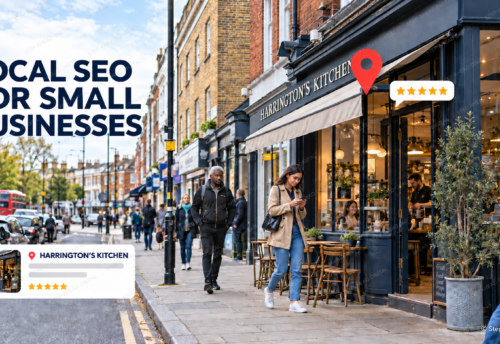
If you run a business that relies on customers from your town, city or region, local SEO matters more to you than almost any other type of marketing. Someone searching “plumber near me” or “best coffee shop in [town]” isn’t browsing, they’re ready to choose, and you want your business to be one of the options they see.
If you are looking to master these principles in greater detail, our comprehensive guide to local SEO for small businesses in the UK breaks down exactly how to align your digital strategy with current search trends to attract more nearby customers.
The good news is that local SEO doesn’t require a huge budget or a technical background. It’s mostly about getting the basics right, staying consistent, and giving Google the information it needs to trust that you’re a genuine, active local business. Here are seven steps that make the biggest difference.
1. Use local and location-specific keywords naturally
Think about how someone in your area would actually search for what you offer. That’s usually a combination of the service and the location, such as “boiler repair in Chorley” or “wedding photographer Preston.” These phrases should appear naturally in your page titles, headings and body copy, particularly on your homepage and any service pages.
The key word here is naturally. Google, and more importantly your readers, can spot forced keyword stuffing a mile off. Write for the person searching first, and the keywords will usually fall into place.
2. Make sure your website is properly optimised for local search
Your website is still doing most of the heavy lifting when it comes to local search, so it’s worth getting right. A few essentials:
- Your business name, address and phone number should be clearly visible, ideally in your footer and on a dedicated contact page.
- Meta titles and descriptions should be specific and genuinely useful, since these are what appear on the search results page and often decide whether someone clicks through.
- A page featuring genuine testimonials and answers to common customer questions helps build trust and gives Google more relevant content to index.
- Basic technical housekeeping matters too, from decent page speed to a working XML sitemap.
If your website was built some years ago or has never really been reviewed with SEO in mind, it’s worth a proper SEO health check to see where the quick wins are.
3. Claim and fully optimise your Google Business Profile
Your Google Business Profile is arguably the single most important local SEO asset you have, and it’s free. This is what shows up in the local map pack, in Google Maps, and often above your website in search results.
Fill in every section: opening hours, services, photos, business category, and a clear, keyword-relevant description. Then don’t leave it to gather dust. Businesses that post occasional updates, respond to reviews and keep their information current tend to perform noticeably better than those who set it up once and forget about it.
4. Get listed in relevant, reputable local directories
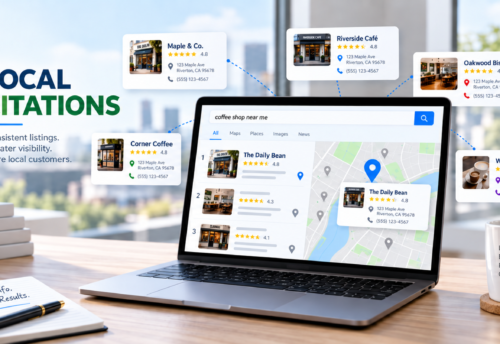
Beyond Google, local business directories still play a role in how search engines judge your credibility. Being listed on recognised platforms such as Yell, Bing Places, and industry-specific directories relevant to your sector helps confirm that your business genuinely exists and operates where you say it does.
Quality matters more than quantity here. A handful of listings on well-known, relevant directories will do far more for you than dozens of low-quality ones.
5. Keep your business details consistent everywhere
This one sounds simple but trips up a surprising number of businesses. Your business name, address and phone number should match exactly across your website, Google Business Profile, social media pages and every directory listing.
Inconsistencies, even small ones like “St.” versus “Street,” can quietly undermine how much search engines trust your listings. It’s worth doing a proper audit every so often to check everything lines up, especially if you’ve moved premises or changed your phone number at any point.
6. Build a steady stream of genuine reviews
Reviews influence both your rankings and, just as importantly, whether someone actually picks up the phone. A business with a handful of reviews from three years ago looks far less trustworthy than one with a steady, recent stream of feedback.
Make it easy for happy customers to leave a review. A simple link sent by text or email after a job’s finished, or a QR code left at the till, removes most of the friction. And never be tempted by fake reviews. They tend to unravel eventually, and the reputational damage isn’t worth the short-term boost.
7. Use social media to reinforce your local presence
Google increasingly looks beyond your website when judging how established and active a business is, and your social profiles play a part in that picture. Keeping your Facebook or Instagram page updated with local content, whether that’s a customer shoutout, a behind-the-scenes look at a job, or a seasonal offer, reinforces that you’re a real, active local business.
It also gives local customers another way to find and vouch for you before they’ve even visited your website. If you’re not sure where to start, we’ve covered why social media marketing matters for small businesses in more detail, along with some realistic starting points.
Bringing it all together
None of these seven steps are complicated on their own, but together they build a much stronger, more trustworthy local presence over time. The businesses that tend to do well aren’t necessarily the ones with the biggest budgets, they’re the ones who get the fundamentals right and stay consistent.
If your business is struggling to appear for the local searches that matter most, it’s often worth getting a second pair of eyes on your website and profiles. At Step Ahead Digital, we offer a free, no-obligation SEO health check to highlight exactly where the opportunities are for your business, whether that’s a technical fix, a content gap, or simply better use of your Google Business Profile.